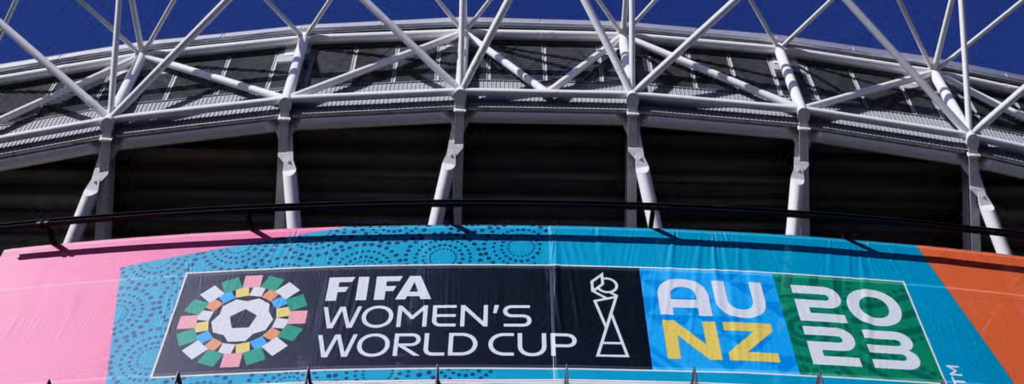
The Women’s World Cup kicked off in Australia and New Zealand on Thursday July 20th, with a total of 32 teams ready to fight it out for the Women’s World Cup Trophy. The Lionesses were set to play their first game against Haiti on July 22nd, with the final game being played on August 20th at Sydney Olympic Stadium.
The Women’s World Cup 2023 has the highest number of LGBT+ players set to take the field. The Lionesses have four out and proud players on the team this year and a total of seven out of twenty-three players who are all out and proud.
Rachel Daly (Forward) scored twenty-two goals in the 2022-2023 Women’s Super League Season; she has also received the Golden Boot. Rachel is openly gay and dating fellow football player Millie Turner who plays for Manchester United.
Jess Carter (Defender) joined The Lionesses in 2017 at the age of twenty. She is dating fellow football player Ann-Katrin Berger, while they both play for Chelsea. During the 2022 Euros Carter played for The Lionesses while Berger played for Germany which made for an interesting final match between England and Germany.
Bethany England (Forward) was named Women’s Super League’s Player of the Year for the 2019-2020 season. She joined The Lionesses in 2019. Bethany is currently in a relationship with fellow footballer Stephanie Williams who plays as a midfielder for Oxford United.
Lauren Hemp (Forward) was named one of UEFA’s 10 players to watch in 2020. Hemp was also responsible for the corner that set up Chloe Kelly to score the winning goal at London Wembley Stadium. Hemp will turn twenty-three while away for the Women’s World Cup. As of 2022 she is currently in a relationship with fellow footballer Ellie Butler who is also a Forward and player for Coventry United.
When we compare Women’s football to Men’s football in terms of openly LGBT+ players, the difference is shocking. During the 2019 Women’s World Cup there were forty-one openly gay or bisexual players. Six of these were from The Lionesses, five from the winning USA team as well as their coach. In comparison, in the Men’s 2018 World Cup, which held around five-hundred players, there wasn’t a single openly gay or bisexual player.
Women football players are constantly striving to show that not only do women deserve to play football but that their sexuality is equally welcome. Traditionally Men’s football is televised more and publicised more meaning female professional football players are forced to have a ‘real life’ job alongside their professional football career, something male football players have never had to struggle with.
Since the Euros and The Lionesses victory, women’s football has been shown more on television than previously and the hope is that The Lionesses will bring it home this year for The Women’s World Cup.
When speaking to the public about the different atmosphere between Women’s and Men’s football, the differences again are outstanding. With people saying Women’s football is welcoming, open, diverse, inclusive and accepting and much more family friendly, while Men’s football is described as having a lot more racism, sexism and homophobia.
Sport in general has a long way to go when it comes to the LGBT+ Community, but we do need to celebrate the wins when we get them. The Lionesses are not only paving the way for female footballers by showing that their sporting achievements are worthy of the same recognition as male footballers, but they’re leading the way for more LGBT+ people in both the male and female sporting worlds.


